


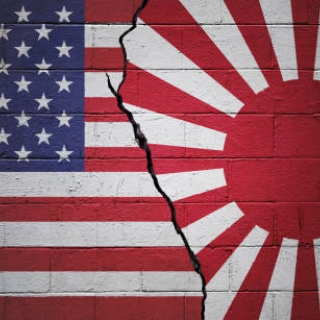
U.S. President Donald Trump on Wednesday said his administration had completed a "massive deal" with Japan, which will see the Asian country subject to a 15% tariff on exports.
Trump said that Japan will invest $550 billion into the U.S., of which the U.S. will "receive 90% of the Profits."
"Japan will open their Country to Trade including Cars and Trucks, Rice and certain other Agricultural Products, and other things. Japan will pay Reciprocal Tariffs to the United States of 15%," Trump said in a social media post.
Announcement of the deal comes shortly after reports said Japan's top trade negotiator, Ryosei Akazawa, met with Trump in the White House on Tuesday.
While the 15% tariff is lower than the 25% initially outlined by Trump, it still goes against Tokyo's earlier demands that Japan be exempt from all U.S. tariffs. The 15% levy is likely to take effect from August 1, when Trump's other reciprocal tariffs against major economies are set to take effect.
Uncertainty over a Japan-U.S. trade deal had risen this week, especially after Prime Minister Shigeru Ishiba's ruling Liberal Democratic Party suffered a bruising loss in upper house elections held over the weekend.
It was not immediately clear whether Trump's 15% tariff on Japan will be compounded with his 25% levy on automobiles and 50% tariff on steel. Tariffs on the two sectors were a major point of contention for Tokyo, given that they are among the country's largest exports to the United States.
While auto majors such as Toyota (NYSE:TM) and Honda (NYSE:HMC) do have production facilities in the U.S., they still export several models and auto parts to the country. U.S. import tariffs stand to increase the showroom prices of their vehicles.
Trump has signaled that he is seeking to bring more manufacturing back to the U.S. with his tariffs. But analysts, and the Federal Reserve, have cautioned that his tariffs could drive up inflation, given that they will be borne by domestic importers.
Source: Investing.com
The upcoming Supreme Court ruling on the legality of President Donald Trump's massive tariffs, which rocked markets in April, is one of the next major tests for US stocks and bonds. Equity markets ha...
The US seized two Venezuela-linked oil tankers in the Atlantic Ocean on Wednesday, one of which was sailing under a Russian flag, as part of President Donald Trump's aggressive efforts to regulate oil...
France is working with partners on a plan on how to respond should the United States act on its threat to take over Greenland, a minister said on Wednesday, as Europe sought to address U.S. President ...
The world community must make clear that U.S. intervention in Venezuela is a violation of international law that makes the world less safe, the Office of the United Nations High Commissioner for Human...
US President Donald Trump threatened on Friday to come to the aid of protesters in Iran if security forces open fire on them, days after unrest that has killed several people and posed the biggest int...
Oil prices stabilized on Thursday (February 12th), as the market reassigned a risk premium to US-Iran tensions despite US inventory data showing swelling domestic supplies. This movement confirms one thing: geopolitical headlines are still more...
Gold prices weakened slightly on Thursday (February 12th), as more solid US employment data reduced market confidence in an imminent Federal Reserve interest rate cut. The strong employment data prompted market participants to shift expectations of...
The Hang Seng Index reversed its downward trend in Hong Kong on Thursday (February 12th), weakening by around 0.9% to around 27,000 after a strong session earlier. This decline halted the momentum of the short term rally, as investors began to...